Ou Yue
Introduction
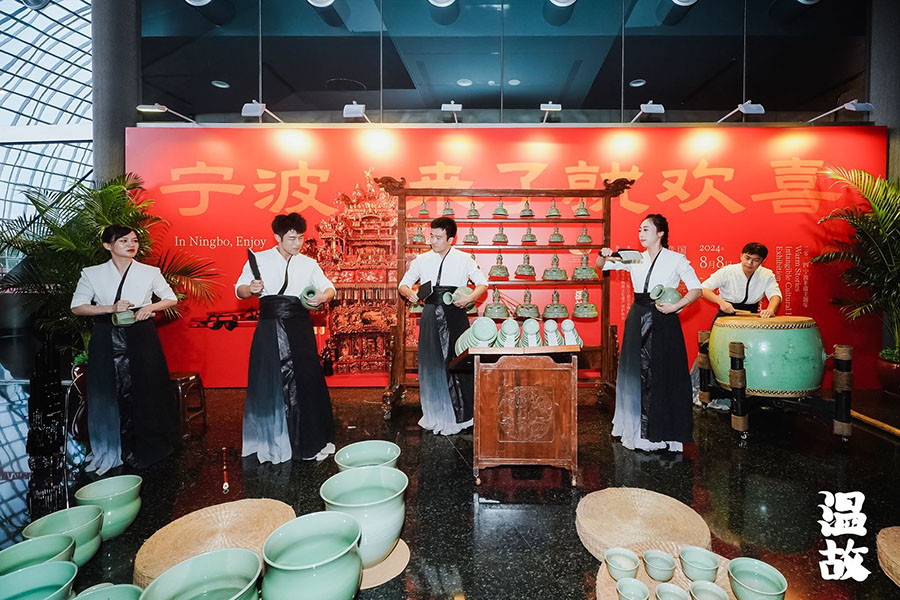
Ou Yue is a traditional Chinese musical art form that emerged during the Tang Dynasty (618-907) in Ningbo, Zhejiang province. This musical style is characterized by the use of celadon porcelain vases and bowls of varying sizes to create music. Ningbo, renowned for being the birthplace of Yue ware ceramics, served as the cradle for Ou Yue. Yue ware is known for its graceful gray or brownish-green ceramics with a creamy texture, which were highly prized in royal palaces far away.
Historical Background
The origins of Ou Yue can be traced back to Ningbo during the height of the Tang Dynasty. The region's rich tradition in ceramic craftsmanship led to the creation of unique musical instruments made from celadon pottery. Unlike traditional musical instruments, these celadon vases and bowls, when filled with water in different amounts, would produce distinct musical notes. This innovative use of ceramics for music quickly gained popularity and extended its influence to the imperial capital of Chang'an.
Decline and Revival
As time passed, the art of Ou Yue, along with the production of Yue celadon, entered a period of decline during the mid-Northern Song Dynasty (960-1127). The once-popular form of entertainment faded into the depths of history. It wasn't until recent years that interest in Ou Yue was rekindled. Efforts have been made in Ningbo to revive this ancient art form, and performances have been held in various venues, including the National Center for the Performing Arts in Beijing. This resurgence has allowed Ou Yue to be reintroduced to new audiences both within China and internationally.
Modern Performances
In modern times, Ou Yue performances have been warmly received by audiences, marking a successful revival of this historical art form. Events featuring Ou Yue have been included in cultural heritage promotions and are part of broader efforts to introduce folklore and traditional arts to urban settings. The use of celadon musical instruments in contemporary concert settings demonstrates the timeless appeal and adaptability of Ou Yue.








